
Turmeric soap and kojic acid soap: what is in each bar.
June 9, 2026
Two bars on the counter. One is a warm gold. One is a hard orange. Both get sold under one word, turmeric on the first, kojic on the second, and both words get treated like a promise. Set the promise aside. Turn both bars over and read the back. That is the whole comparison.
Turmeric soap vs kojic acid soap comes down to this: turmeric is a root, a pigment, and a scent, and it sits in a bar as a plant ingredient you can see and smell. Kojic acid is a single compound, first isolated from koji, the fermentation culture that turns rice into sake and soybeans into soy sauce, and it sits in a bar as an added active. One is an ingredient from a kitchen shelf. The other is an ingredient from a lab bench, with a fermentation story behind it. Neither fact is a claim. Both facts are on the label, if the label is honest.
What kojic acid is
Koji is a mold, Aspergillus oryzae, and it has been the working engine of Japanese fermentation for centuries. Brewers grow it on rice. The rice becomes sake. Grown on soybeans, the same culture starts soy sauce and miso. Kojic acid was isolated from that culture, named for it, and later produced at scale for use in formulas. In a bar of soap it arrives as a measured addition, often in a modified form chosen for shelf stability, and the bar around it is usually a standard soap base doing standard soap work.
A kojic acid bar is easy to spot. The color runs orange to deep amber. The scent is often loud, a papaya or citrus perfume layered over the base. The lather is ordinary. The bar itself behaves like any other bar. What makes it a kojic acid bar is the compound on the ingredient list and the paragraph of promises printed above it.
That paragraph is the thing to read carefully. Kojic acid bars are usually built around marketing language about what the bar will do to skin tone. We are not going to repeat those promises here, and we do not make promises like them about any ingredient in our own line. Those claims belong to the brands that print them. What we can say is what the label says: the compound is in the bar, at some concentration the label may or may not disclose, inside a base of cleansers, oils, and fragrance. The label is the product. The paragraph is the pitch.
What turmeric is
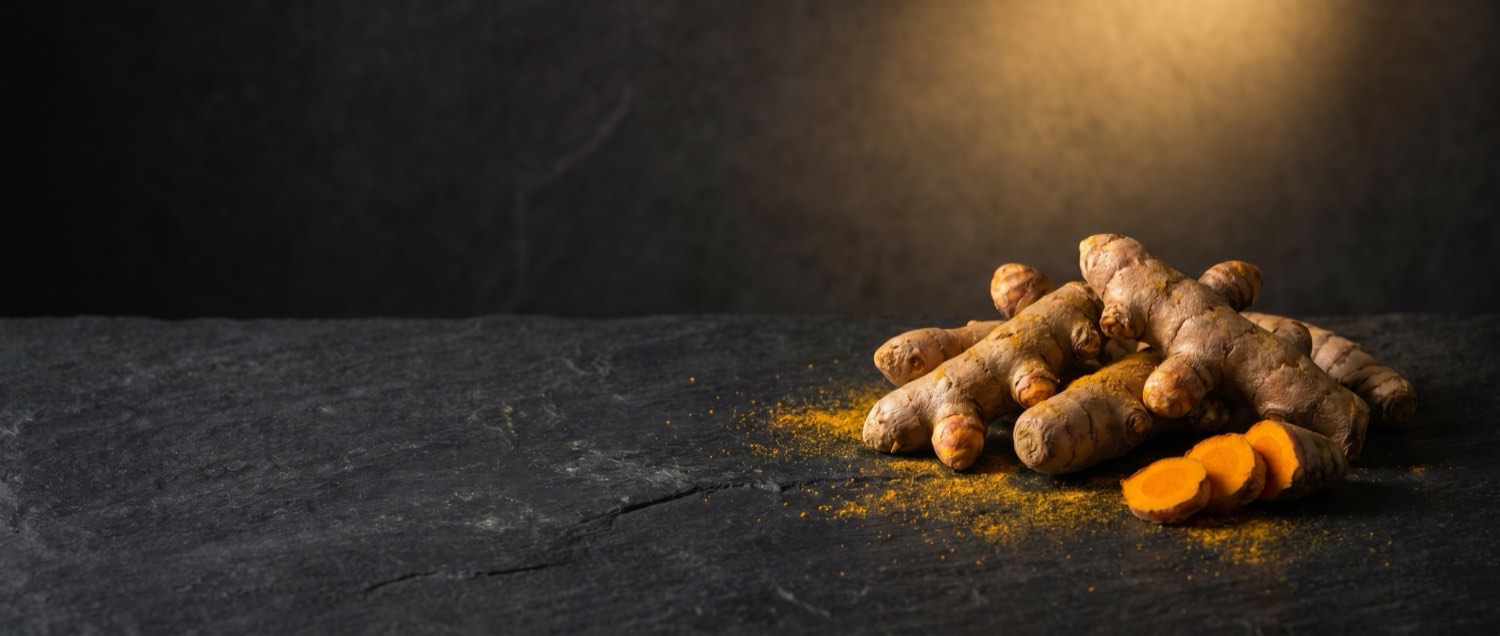
Turmeric is a root. Dig it up and it looks like ginger with a deeper color inside. Dry it and grind it and you get the pigment that stains a wooden spoon and a white shirt. The color is the curcumin in the root. The scent is warm and dry, the wood end of a spice drawer, not the heat of a curry. Turmeric has been used in skincare for centuries, across South Asia, long before any bar of soap carried a barcode.
In a bar, turmeric reads three ways. Color: a gold cast that runs through the bar instead of sitting on its surface. Scent: that warm root note, usually paired with something bright to lift it. Texture: nothing unusual, the bar lathers like the base it is built on. We wrote a longer piece on what turmeric does in a bar of soap if you want the slow version. The short version is that turmeric is there as itself. A plant, a pigment, a scent. The label does not need a paragraph to explain it.
Turmeric soap vs kojic acid soap at the sink
Hold one in each hand. The kojic bar is louder. Brighter orange, sharper perfume, bigger type on the box. The turmeric bar is quieter. The gold is softer. The scent stays close. Wet them both and the difference holds: the kojic bar smells like its fragrance, the turmeric bar smells like its root.
The honest difference is not in the lather. It is in what each label asks you to believe. A kojic acid bar asks you to believe the paragraph. A turmeric bar, done plainly, asks you to read the list. We think the list is enough.
What is in our bar
The turmeric bar is built on turmeric leaf, lemon extract, glycerin, sorbitol, argan oil, palm oil, and sodium stearate. The lather is dense and slow. The lemon comes up first, then the turmeric settles in underneath it and stays. No parabens. No sulfates. No paragraph of promises, because we do not make effect claims about any ingredient. The bar comes as a 2-pack, two 4.95 oz bars, for $15.
Two bars, two labels. Read both. Then decide at the sink, not at the shelf.