
Notes from Detroit.
Short reads on what is on the shelf, the scents and ingredients, and how to use them.
What is cassia, and is it cinnamon?
A cinnamon: the bark of Cinnamomum cassia, an evergreen tree first grown in China, and the most common cinnamon sold in North America. Its leaves give a spicy, woody oil.
-
What is cassia, and is it cinnamon?
A cinnamon: the bark of Cinnamomum cassia, an evergreen tree first grown in China, and the most common cinnamon sold in North America. Its leaves give a spicy, woody oil.
-
What is cocoa butter, and what is it made of?
The fat of the cocoa bean, the seed of the cacao tree. It is pressed out of ground, roasted beans, it is not dairy, and it melts just below body temperature.
-
How long should you wash your hands?
At least 20 seconds of scrubbing with soap, CDC says, then rinse and dry. Warm or cold water both work, and so do bar and liquid soap.
-
How much water does a shower use?
About 2.5 gallons a minute from a standard showerhead, EPA says, so a 10 minute shower uses about 25 gallons. A WaterSense showerhead uses no more than 2 gallons a minute.
-
Can you shower during a thunderstorm?
No. Wait at least 30 minutes after the last thunder you hear. CDC and the National Weather Service both say to stay out of the shower, and off the plumbing, during a storm.
-
Can you shower with contacts in?
No. Take your contact lenses out before you shower, CDC says. Tap water is not germ-free, and it can carry an ameba that causes a rare, serious eye infection.
-
What are essential oils, and how are they made?
The fragrant part of a plant, released by crushing it or steaming it, the National Cancer Institute says. FDA has no regulatory definition for the term, and a plant source does not make an oil safe.
-
What is a loofah, and what is it made of?
A dried gourd. The loofah is the fibrous inside of the fruit of Luffa aegyptiaca, a climbing vine in the cucumber family. Picked young, the same fruit is eaten like squash.
-
What is an everything shower?
One long shower with every grooming step in it: hair, body, a scrub, a shave and lotion. UPMC suggests keeping it to once a week or less.
-
What is argan oil, and where does it come from?
An oil from the kernels inside the fruit of the argan tree, Argania spinosa, which grows in the dry south-west of Morocco. UNESCO lists the know-how of making it as intangible cultural heritage.
-
What is hard water?
Water high in dissolved calcium and magnesium. USGS calls 0 to 60 mg/L soft and more than 180 very hard. In hard water, soap forms soap scum and it takes more soap to get clean.
-
What is jojoba oil, and how do you say jojoba?
A liquid wax from the seeds of jojoba, a drought tolerant shrub of the Sonoran and Colorado Deserts. Say it huh-HOH-buh: both j's sound like an h.
-
What is lye?
Another name for sodium hydroxide, or caustic soda: a very corrosive alkali used to make soap, paper and drain cleaners. FDA says no lye remains in soap made properly.
-
What is saponification, and what does saponified mean?
The reaction that turns a fat or oil into soap: an alkali such as lye splits it into soap and glycerin. Saponified means made into soap that way.
-
What is sebum, and what are sebaceous glands?
The oil your skin makes on its own. The National Cancer Institute defines sebum as an oily substance produced by certain glands in the skin: the sebaceous, or oil, glands in the dermis.
-
What is the largest organ in the human body?
Your skin. MedlinePlus says an average adult carries about 6 pounds of it over 18 square feet, in three layers: the epidermis on top, the dermis, and the hypodermis underneath.
-
When was soap invented, and who invented it?
No single inventor is known. The oldest evidence is Babylonian clay cylinders from about 2800 BC whose words are read today as 'fats boiled with ashes'.
-
Why do fingers wrinkle in water?
Two answers, and scientists still study both. The outer layer of skin soaks up water and puckers, the Library of Congress says, and newer research ties the wrinkles to blood vessels narrowing under nerve control.
-
Does soap kill bacteria? Do you need antibacterial soap?
Plain soap lifts germs off your skin so water rinses them away. FDA finds no proof antibacterial soap prevents illness better.
-
How often should you shower?
Several times a week is plenty for most people, Harvard Health says, unless you got sweaty or grimy. Keep it short and warm.
-
How to use body wash, and do you need a loofah?
Warm water, a small amount, lather where you need it, rinse, pat dry. Hands or a washcloth do the job; a loofah needs care.
-
Should you shower in the morning or at night?
Either one. A Cleveland Clinic dermatologist says there is no right time: a morning shower wakes you up, a night shower washes off the day.
-
Can you bring bar soap, body wash or lotion on a plane?
Bar soap, yes, in a carry-on or a checked bag. Body wash and lotion go in a carry-on only at 3.4 oz or less; bigger bottles go in a checked bag.
-
What is soap made of? Is there lye in it?
Fats or oils and an alkali, such as lye. FDA says that when soap is made properly, no lye remains in the finished bar.
-
Does lotion or body wash expire?
It can go bad. No US law makes a lotion or a body wash print an expiration date, so here is how to tell.
-
Body scrub before or after body wash?
You may not need both. A lukewarm rinse, small circles for about 30 seconds, another rinse, then lotion.
-
Body lotion or body butter: what is the difference?
Thickness. A lotion is a light mix of water and oil. A body butter is the thickest, with less water.
-
Why Detroit is called the Motor City.
Because the American car industry grew up here. Ford, General Motors and Chrysler made Detroit its center.
-
What paraben free means on a label.
Parabens are a family of preservatives. Paraben free means none of their names is on the back of the bottle.
-
Is shower gel the same as body wash?
Yes. Two names for one thing: a liquid cleanser made for the shower.
-
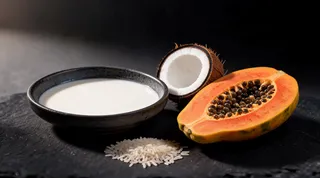
Goat milk body wash ingredients: what each part of the label is for.
Water, rice bran oil, then the milk. A walk down the Goat Milk Oasis wash label, from the first lines to the cleansers to the scent.
-
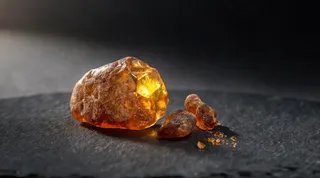
Amber resin in a body wash: what it is and what it does.
A fossil, a perfume accord, a line on a label. One word, three meanings, and what each one does in the bottle.
-
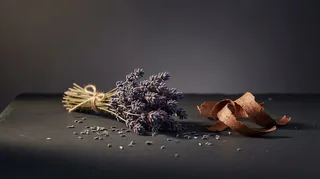
Lavender body wash: true lavender, lavandin, and what the label says.
Lavender on a label can mean the true plant, a sharper hybrid or a perfume. The Latin name tells you which, and what it does in a wash.
-
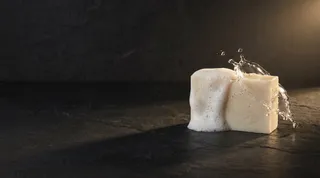
Bar soap or body wash: how each one cleans.
Same job, two tools. How a bar cleans, how a wash cleans, and which one earns the shelf.
-
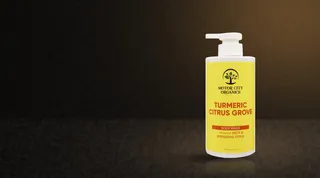
What sulfate free means on a body wash label.
Two names, SLS and SLES. Sulfate free means both are absent. Here is what stands in for them.
-
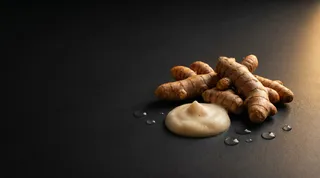
What turmeric does in a bar of soap.
Pigment, scent, a slow gold lather. What the root actually does in a bar, without the hype.
-

Turmeric soap vs kojic acid soap: how the two bars differ.
Turmeric is a root, a pigment and a scent. Kojic acid is one compound, first isolated from koji. How to tell the two bars apart, label first.
-
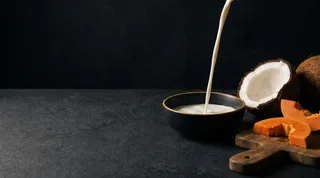
What is actually in goat milk: a label reader's guide.
Fats, proteins, milk sugars. The carton already knew. The label tells the rest.
-

The front and the back of the bottle.
What the front earns. What the back carries. What an absence means.
-
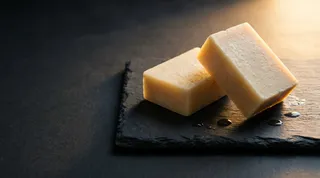
The two-pack.
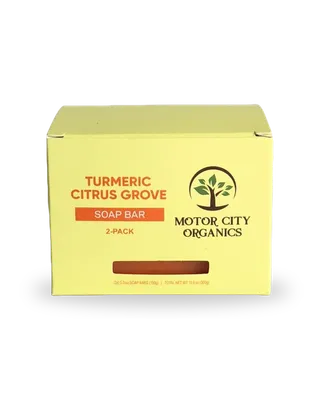
A soap lasts about three weeks. A pair lasts longer, with a spare for the sink.
-

A morning with turmeric.
Lemon first. Then the warm floor under it. The lotion in actual use.
-

Why lemon peel.
The peel, not the juice. The second note across the whole line.
-
Why this line exists.
Ten scents. Wash, lotion, bar soap, and scrub. Named ingredients. Founded in Detroit, 2018.
-

Why Detroit.
Detroit is the lens. It is the eye for what is durable and what is dressed up to look durable.
-
Why no em dashes.
A small discipline. A real one.