
What are essential oils, and how are they made?
The fragrant part of a plant, released by crushing it or steaming it, the National Cancer Institute says. FDA has no regulatory definition for the term, and a plant source does not make an oil safe.
The fragrant part of a plant. The National Cancer Institute’s PDQ cancer information summary about aromatherapy with essential oils states it this way: “Essential oils are the fragrant (aromatic) part found in many plants, often under the surface of leaves, bark, or peel.” FDA says there is “no regulatory definition” for essential oils, “although people commonly use the term to refer to certain oils extracted from plants.”
How are essential oils made?
By crushing the plant or steaming it. The same summary: “The fragrance is released if the plant is crushed or a special steam process is used.” It adds that “Essential oils are very concentrated. For example, it takes about 220 pounds of lavender flowers to make about 1 pound of essential oil.” And they do not keep forever in the open: “The aroma of essential oils fades away quickly when left open to air.”
Does FDA regulate essential oils?
It depends on what the product claims to do. FDA: “If a product is intended only to cleanse the body or to make a person more attractive, it’s a cosmetic.” A soap or lotion sold with claims that it will “relieve colic, ease pain, relax muscles” or help you sleep is making drug claims, in FDA’s words, and “The fact that a fragrance material or other ingredient comes from a plant doesn’t keep it from being regulated as a drug.”
Are essential oils safe because they come from plants?
Not for that reason. FDA warns that “many plants contain materials that are toxic, irritating, or likely to cause allergic reactions when applied to the skin.” Citrus is its example: “Certain citrus oils used safely in food can also be harmful in cosmetics, particularly when applied to skin exposed to the sun.”
Essential oil or fragrance?
A label can hide a blend behind one word. Fragrance formulas, FDA says, “are complex mixtures of many different natural and synthetic chemical ingredients”, and US rules let a label list them simply as fragrance.
Ours
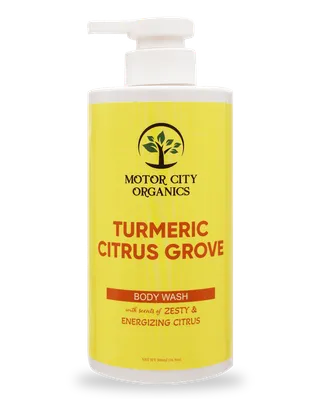
Our labels name each oil. Every one of our ten body wash labels names the same six essential oils: bergamot oil (Citrus Aurantium Bergamia Fruit Oil), Citrus Grandis peel oil, patchouli oil, neroli oil (Citrus Aurantium Amara Flower Oil), frankincense oil (Boswellia Carterii Oil) and Roman chamomile oil (Anthemis Nobilis Flower Oil). Three of the six carry Citrus in their label names (bergamot, Citrus Grandis peel and neroli). FDA’s warning is about certain citrus oils and names none of ours, and we say nothing about ours either way. They are there for scent, and we claim nothing else for them. Each wash is $15 for 16.9 oz.
Sources: National Cancer Institute, “Aromatherapy With Essential Oils (PDQ), Patient Version”, updated September 11, 2023; FDA, “Fragrances in Cosmetics”, content current as of February 28, 2022; FDA, “Aromatherapy”, content current as of September 8, 2023. Read November 19, 2026.