What is jojoba oil, and how do you say jojoba?
A liquid wax from the seeds of jojoba, a drought tolerant shrub of the Sonoran and Colorado Deserts. Say it huh-HOH-buh: both j's sound like an h.
A liquid wax from a desert shrub’s seeds. The USDA Forest Service’s seed manual says: “The most noteworthy feature of jojoba from a human perspective is the unusual liquid wax that makes up the storage reserve of its seeds.”
What is the jojoba plant?
An evergreen shrub of the American Southwest and northwest Mexico, also called goatnut. The same manual says “Jojoba is found from coastal and cis-montane southern California east to central Arizona and south to Sonora and Baja California”, and that “It is a characteristic plant of upland shrub communities in the Sonoran and Colorado Deserts.” It grows to about 6.5 feet, rarely 10, and the manual adds: “Plants are extremely tolerant of drought”.
Where does jojoba oil come from?
The seeds, which grow on the female plants only. They sit in a small capsule: “The 1 to 3 large seeds are borne in a capsule that superficially resembles an acorn.” Inside the seed, the parts that store food “contain about half of their weight as wax”.
Is jojoba oil a wax?
Yes. The Forest Service describes it this way: “This substance, a fatty acid ester of a long-chain alcohol, is unique in the plant kingdom.” It “has chemical and rheological properties similar to those of sperm whale oil”, and the manual dates the growing trade: “Interest in commercial production of jojoba seed was greatly increased in the mid-1970’s, when import of sperm whale oil into the United States was banned.”
How do you say jojoba?
Huh-HOH-buh. The Cambridge English Dictionary writes the US pronunciation as /həˈhoʊ.bə/, so both j’s are said like an h, and the stress falls on the middle.
Ours
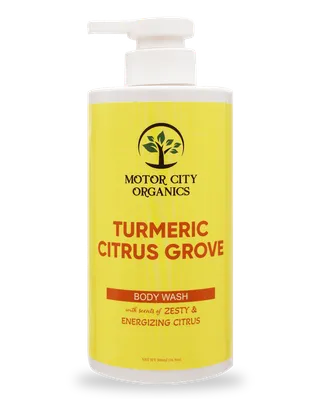
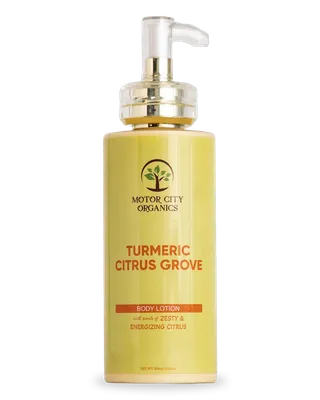
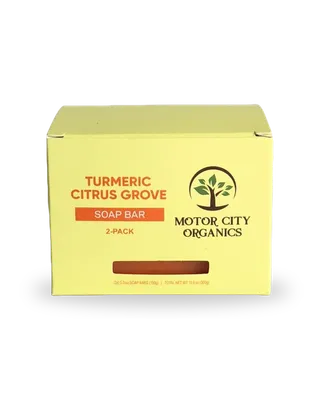
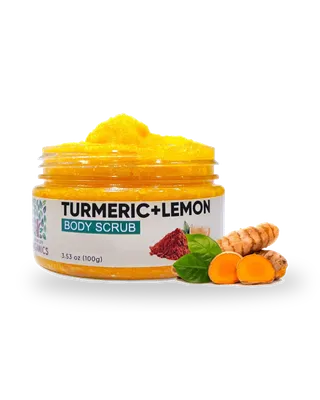
Our Turmeric Citrus Grove body scrub lists jojoba seed oil. Its printed label spells it Simondsia Chinensis Seed Oil, a misprint of the plant’s Latin name, Simmondsia chinensis; the ingredient list on the scrub’s page uses the right spelling. The grains in that scrub are apricot seed powder, and the jar is 3.53 oz (100 g) for $15. We claim nothing for the jojoba on your skin.
Sources: Susan E. Meyer, USDA Forest Service, Woody Plant Seed Manual, “Simmondsia chinensis, jojoba”; Cambridge English Dictionary, “jojoba”. Read November 19, 2026.