
Amber resin in a body wash: what it is and what it does.
A fossil, a perfume accord, a line on a label. One word, three meanings, and what each one does in the bottle.
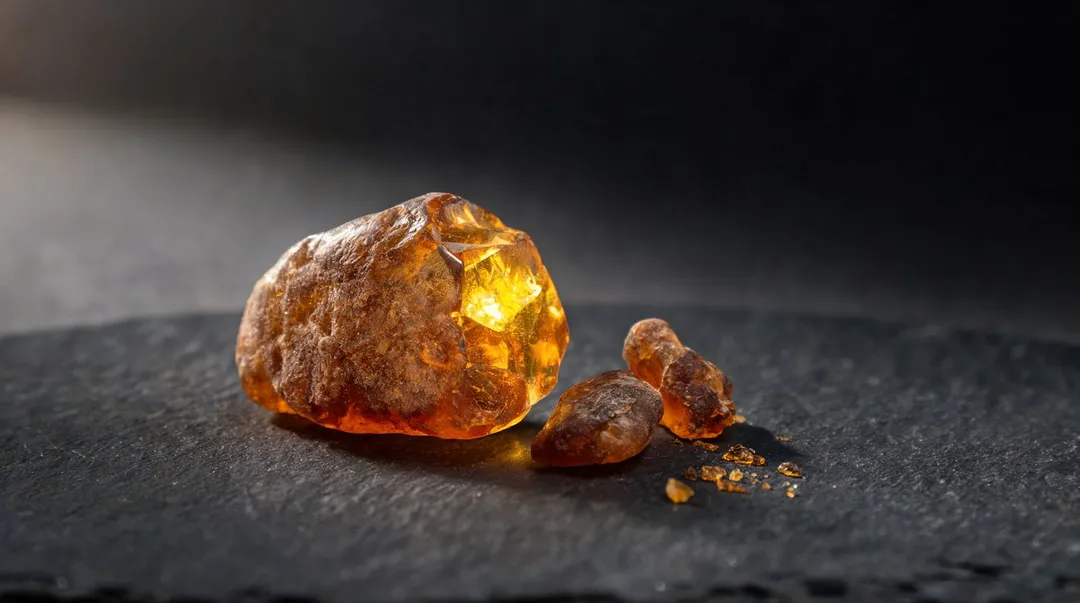
Search what amber does for skin and the answers come back glowing. Ancient remedy, warming energy, a list of benefits with no source under any of them. Here is the quieter version. Amber in a body wash does what a scent ingredient does. It shapes how the wash smells in the bottle, in the steam and on the skin afterward. Everything past that is a claim, and a claim belongs to the brand making it, not to the resin.
The harder part is the word itself, because amber means more than one thing, and a label is the only place that tells you which one you are buying.
The fossil: resin that waited a long time
Amber is fossilized tree resin. Resin ran down the bark of ancient conifers, hardened, got buried in sediment, and came back as a stone that is not a stone. The amber that washes up along the Baltic coast is tens of millions of years old. It is light for its size, it warms in the hand, and held to a lamp it glows from the inside, which is most of why people have cut it into beads for thousands of years. The trade route that carried it south from the Baltic to the Mediterranean moved enough of it to earn its own name: the Amber Road.
Rub a piece of raw amber and it gives off a faint smell of pine and smoke, the resin it used to be. Burn a fragment and the smell gets stronger, sharp and churchy. That smell is real, and it is faint. A polished bead on a necklace smells of almost nothing.
The perfume: an accord built to look like the stone
Here is where the word changes jobs. In fragrance, amber almost never means the fossil. It means an accord, a blend of resins and balsams put together to smell the way the stone looks: warm, deep, slow, lit from inside. The classic build leans on labdanum, a sticky resin from the rockrose shrub, softened with benzoin and vanilla. Some versions add frankincense or patchouli for smoke and earth.
There is a third amber too, and it causes most of the confusion. Ambergris comes from sperm whales, not trees, and old perfumery used it heavily. The names sound alike. The materials have nothing to do with each other.
So a candle, a perfume or a soap that says amber on the front is usually telling you about a mood, not a mineral. That is not a trick. Warm, resinous and deep is a real family of scent, and amber is the name the trade gave it. It only becomes a problem when the front of the bottle sells the stone and the back of the bottle says nothing at all.
What the label tells you
Turn the bottle over. A label that writes only “fragrance” or “parfum” is telling you a scent is in there and declining to say what it is built from. A label that names the material is showing its work. We wrote a whole post on how to read the front and the back of a bottle, and amber is a good test case for it.
Position matters too. Ingredients are listed most first, so a name near the top is doing real work in the formula. Past the first handful the amounts get small, and anything at one percent or less can be listed in any order the maker likes.
How the Amber Glow wash is built
The Amber Glow body wash names it on the label: Amber Extract, third in line, after water and rice bran oil. Then the cleansing part, a coconut-derived base with glycerin. Further down sit the plant oils and extracts every wash in the line shares, frankincense and patchouli among them. The full label is posted, every name, in order, nothing folded into a single mystery word.
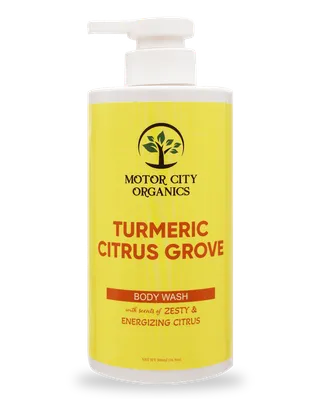
What that builds is a wash that starts warm and stays warm. Pour it, work up the lather, and the amber comes up in the steam first, warm and earthy. It rinses clean. What stays sits close to the skin, and it is still there in the evening, long after the shower. Where Turmeric Citrus Grove puts a bright note over a warm floor, Amber Glow is all floor.
It is a 16.9 oz bottle, $15. The Amber Glow lotion and bar are coming soon, and we will not describe them until their labels are printed. There is more on the resin itself on our amber page.
So that is the answer, plainly. Amber is a fossil, a perfume accord and a line on a label, and in a body wash its job is scent. The stone glows. The accord smells the way the stone looks. The label is where a maker either names the material or hides it behind one word. Read it before you believe the front.
More from the journal.
-
Lavender body wash: true lavender, lavandin, and what the label says.
Lavender on a label can mean the true plant, a sharper hybrid or a perfume. The Latin name tells you which, and what it does in a wash.
-
What turmeric does in a bar of soap.
Pigment, scent, a slow gold lather. What the root actually does in a bar, without the hype.
-

Turmeric soap vs kojic acid soap: how the two bars differ.
Turmeric is a root, a pigment and a scent. Kojic acid is one compound, first isolated from koji. How to tell the two bars apart, label first.