
Lavender body wash: true lavender, lavandin, and what the label says.
Lavender on a label can mean the true plant, a sharper hybrid or a perfume. The Latin name tells you which, and what it does in a wash.
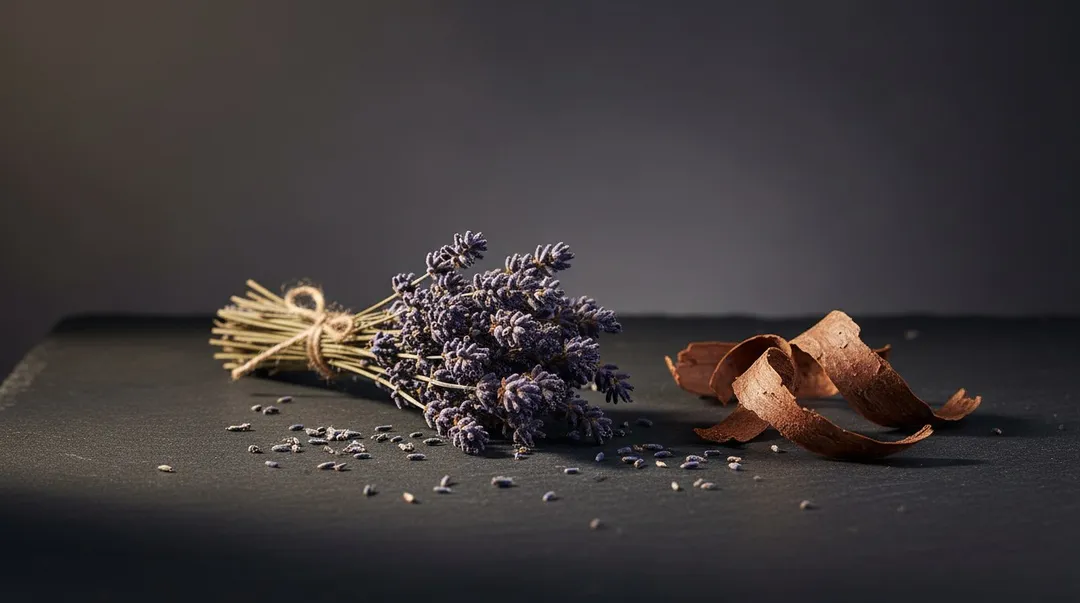
Lavender has two Latin names worth knowing. Lavandula angustifolia is the plant gardeners call English lavender and perfumers call true lavender. Lavandula x intermedia, sold as lavandin, is its hybrid, and it supplies much of the lavender smell in detergents, candles and soap. A third kind of lavender has no Latin name at all: a fragrance blend made to smell like the flower.
This post is about telling those three apart on a body wash label, and about what lavender is doing in the wash at all. The short answer to the second part is smell. There is no promise here about sleep or mood, and there is none on our label.
What is Lavandula angustifolia called?
English lavender, true lavender, and in older herbals, common or narrow leaved lavender. That last one is a translation: angustifolia means narrow leaf. The English name is a gardening habit, not a birthplace. The plant grows wild on dry, high slopes in the western Mediterranean.
It is a low, woody shrub with grey green leaves and short, dense spikes of violet flowers. Pinch a flower head and the smell is soft and floral, a little herbal, faintly sweet, with almost no sharp edge. Two natural compounds carry most of that, linalool and linalyl acetate. The plant gives relatively little oil for the land it takes, and that is a large part of why it costs more than its hybrid.
Lavender or lavandin?
Lavandin is true lavender crossed with spike lavender, a broader leaved relative with a sharper smell. The cross grows bigger, on longer stems, and it yields far more oil from the same field. That yield is the whole reason it is everywhere.
Put the two side by side and the difference is easy. The hybrid is louder and cooler, with a camphor note that sits close to rosemary and reaches the back of the nose. True lavender stays rounder and closer. Neither is a lesser plant. They are two materials sold under one common name.
On an ingredient list the Latin settles it:
- Lavandula Angustifolia is true lavender.
- Lavandula Hybrida is lavandin.
- Lavandula Latifolia is spike lavender.
- Fragrance or Parfum, with no lavender named, is a blend, and the maker has not said what it is built from.
That last one is allowed and common. It just means the word on the front describes a smell rather than a plant. Our guide to reading a label goes further into the rest of the list.
Oil or extract?
The second word after the Latin matters too. An essential oil is distilled from the flowering tops, and it is the plant’s scent in concentrated form. An extract draws some of the plant’s compounds into a carrier, such as water, glycerin or oil, and it smells milder for it.
Order matters as well. Ingredients run from most to least, so a lavender listed near the top is a real part of the formula. At or under one percent, US rules let a maker list ingredients in any order, so placement down there tells you less.
The top of the Lavender Forest label
These are the first four lines of the Lavender Forest body wash label, in order:
- Aqua (water)
- Oryza Sativa Bran Oil (rice bran oil)
- Lavandula Angustifolia (Lavender) Extract
- Pine Bark Extract
So the lavender here is the true plant, as an extract, third by amount. The pine bark next to it is the forest in the name. The cleansers come after, led by sodium cocoate, a soap made from coconut oil, with glycerin beside it. Aloe leaf extract is further down. The citrus oils, bergamot and a citrus peel oil from Citrus grandis, sit in the middle of the list, and patchouli, neroli, frankincense and Roman chamomile are near the end. The complete ingredient list is on the site, line for line as printed.
What it smells like in the shower
The lavender arrives first, carried up by the steam, and it smells like the plant rather than a sachet. The pine bark keeps it low and woody underneath, a floral that never turns sweet. Uncapped, the wash smells quieter than it does on skin.
The wash is $15 for 16.9 oz. A Lavender Forest lotion and bar are coming soon. Their labels are not printed yet, so this post stays with the wash.
At the shelf, look for the Latin. Angustifolia is the true plant, hybrida is lavandin, and fragrance alone is a perfume that has not told you its parts.
More from the journal.
-
Amber resin in a body wash: what it is and what it does.
A fossil, a perfume accord, a line on a label. One word, three meanings, and what each one does in the bottle.
-

What turmeric does in a bar of soap.
Pigment, scent, a slow gold lather. What the root actually does in a bar, without the hype.
-

Turmeric soap vs kojic acid soap: how the two bars differ.
Turmeric is a root, a pigment and a scent. Kojic acid is one compound, first isolated from koji. How to tell the two bars apart, label first.